Few days ago we dealt with an interesting problem. We were loading HTML files in an IFrame. While the document is being loaded we displayed a progress indicator which notified the user that processing is going on. Everything worked fine until we started loading the PDF documents into the IFrame. When PDF documents were loaded the indicator never vanished when the document was completly loaded. In this article we are going to discuss a solution to this problem.
NOTE: We were only able to find a solution for the IE browser. If you find a solution for FireFox then please post it in the comments.
Let's first see how to load a simple HTML document through a URL into the IFrame. Here is the IFrame code to load the HTML document.
Tracking Iframes: How To Track Conversions Through Iframes With Gtm
Don't worry about the size of the IFrame. You can always use the Width and Height attributes of the IFrame to adjust the size. Now, let's see how to add a progress indicator to the page which will notify the user that the document is being loaded.
We are going to use a simple DIV element to create the progress indicator. The DIV will contain some text and a GIF image. Here is the code for the progress indicator DIV:
When the page loads the indicator is enabled by default. We can hook up the onload event of the IFrame to close the indicator once it is loaded.
Issues With Domready—animation Flickering On Page Load. · Issue #3067 · Gatsbyjs/gatsby · Github
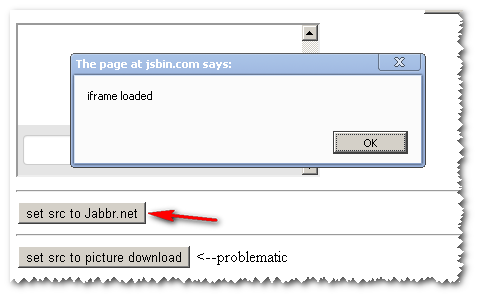
And here is the screenshot showing that even though the PDF document is successfully loaded the progressIndicator is never removed from the page. This is because the load event of the IFrame is never fired.
This is an interesting problem since the IFrame only seems to be chocking on the PDF documents. Let's see how we can solve this problem.
Our solution is based on the IFrame.document.readyState property. We will poll on the status of the property and when the status is complete we will hide the progress indicator. For polling we will use the window.setInterval method. Check out the implimentation of the closeProgressIndicator function shown below:
Animating With Lottie
The closeProgressIndicator function is fired every 1 second (1000 milliseconds) and checks the status of the iframe.document.readyState. If the readyState is complete then it simply hides the progressIndicator and clears the interval.
Unfortunately, this only works for IE. On FireFox you will get an exception since FireFox does not recognize iframe.document property. Currently, we are not aware of any solution to this issue for the FireFox browser. If you have any soluton then please post it in the comments section.
In this article we learned how to load different documents into the IFrame. The article focuses on the problem caused by loading PDF documents. The solution mentioned in this article only works with the IE browser. In the future articles we will try to find a generic solution.In my previous article about lazy loading, we’ve learned that implementing it into a website requires using a third-party JavaScript library and modifying your application to be supported (or writing a custom solution yourself). Luckily, help is on its way – all this might change for the better thanks to a new proposal of native lazy loading that’s already available in the latest Chromium-based browsers! Let’s see what it has to offer.
Use Webview And Iframes To Show A Pretty Weather Forecast
Check out my previous article on lazy loading if you haven’t already. Otherwise, let’s get to native lazy loading in Chromium-based browsers.
Add a loading=”lazy” attribute to img or iframe tags that you want to load on demand. The browser will load these when users scroll near the element.

Graphic assets are often the most significant part of the data required to display a page. Completely understandable from the UX/UI point of view though – they make your website look more appealing to the users. While these assets are needed, some of them may be off-screen. That makes it possible to defer loading them to the time when they are actually required – when a user scrolls down and is near seeing them. That operation of deferring loading resources is called lazy loading (or “on-demand” loading).
Editor X: Adding An Html Iframe Element
It’s always been quite tricky to implement lazy loading because of the need for writing additional JavaScript logic or using external libraries and modifying an application to support it.
Now we have a new option – a native implementation that just works and can be used easily by developers right at the time of adding new elements.
And by a fact that’s just an attribute, it can be used with every frontend framework. That’s something I’ve been waiting for.
Gif Search App Javascript
The full specification can be found in a proposal pull request on GitHub and I strongly encourage you to read the discussion there in order to see how it looks like to propose a new attribute to a living specification and what you need to think about. However, it’s not required to get to know how the loading attribute works, and we can just jump straight into values we have available:
All images and iframes above the fold (being visible without scrolling) load normally, others are loaded when the user scrolls near them. The distance when elements should begin loading is dynamic and depends on:
Currently, these values are hardcoded in Chromium’s source and can be overridden only using command line arguments. It may seem like a big issue of the native implementation but actually, it has one substantial advantage – it depends on the effective connection type of user’s device. It would require a lot of work to detect it correctly and we can assume that the values provided by authors of that feature are calculated correctly, so we don’t need to worry about it.
Lazy Load Iframe Embedded Content With Javascript
To make the native lazy loading work, you need to add a single attribute – loading=lazy to an img element. However, you may want to prevent browser reflow when the image is loaded by adding dimensions to it (width and height attributes) or using styles.
Iframe elements work slightly different than images. Chrome firstly checks whether the element is hidden (is/isn’t a good candidate to be lazily loaded). Chrome considers the element as hidden when:
Lazily loaded image and iframe element’s onload events are triggered – as you might expect – when data is completely loaded. So when the element is lazily loaded, onload fires as a user scrolls near it, and the data is fetched.
Faq: When Do I Use Javascript Or Iframe Embedding?
The document’s onload event works a little bit differently. Traditionally, the event has been fired when all images and iframes were already loaded. With lazy loading, the document doesn’t wait for deferred, off-screen elements to be loaded before triggering the event.
Currently, the native lazy loading feature has shipped with Chrome 76 stable release and is available in all Chrome 76+ based browsers. By the time of writing this article, I was able to use native lazy loading in Chrome, Opera, and Microsoft Edge Beta. There’s also an open implementation ticket for Firefox .

You can easily detect if native lazy loading is present by checking the loading property – it’s defined in prototypes of HTMLImageElement and HTMLIFrameElement:
The New Native Lazy Loading For Images And Iframes
Native Lazy Loading is a new proposal that might become a standard one day. Thankfully it’s been implemented in Chrome, and there are easy ways to polyfill it. I encourage you to play with the new loading attribute to get to know it. If you need full browser support, you might want to prepare a fallback to an old method using JavaScript. If you’re interested in that, I’ve already published an article about traditional lazy loading implementation in JS and React .
Full-stack developer and front-end specialist with an eye for strongly typed languages. He spends most of the time developing efficient and highly scalable web apps and contributing to a variety of open source projects. You don’t have to ask him twice to present at a conference or meetup either. When he doesn’t do, think or dream about coding, he enjoys photography and electronics.
Framer Motion – the best library to build animations in a declarative way. Code samples you need for a new or already existing project Technology
Testing Iframes With Cypress
We regard the team as co-founders in our business. The entire team from The Software House has invested an incredible amount of time to truly understand our business, our users and their needs.
0 Response to "Iframe Onload Animation"
Posting Komentar